How do you connect a simple off-grid power system? (Battery, solar panel, charge controller, inverter)
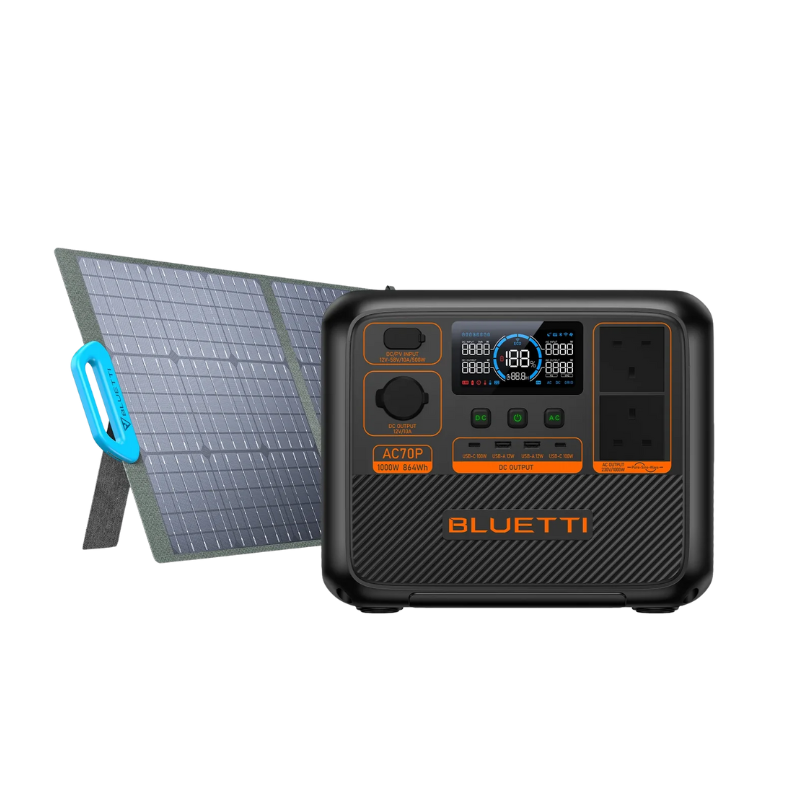
Off-grid power solutions are becoming increasingly popular, especially among campers, tiny home dwellers, festival organizers, and anyone who wants to be independent of the electricity grid. But how do you set up such a system? And more importantly: how do you connect it correctly?
In this article, we explain step-by-step how to set up a simple off-grid system using four main components: a solar panel, a charge controller, a battery, and an inverter. This way, you'll have access to your own energy anytime, anywhere.
1. What is an off-grid system?
An off-grid system is a power supply that operates completely independently of the public electricity grid. Instead of using electricity from a grid operator, you generate your own energy using solar panels. This energy is stored in a battery and, if necessary, converted to 230V AC with an inverter.
Main components:
-
Solar panel: converts sunlight into direct current (DC)
-
Charge controller: regulates the charging current to the battery and protects against overcharging
-
Battery: stores the generated energy
-
Inverter: converts direct current to alternating current (230V) for your devices
2. Step 1: Choose and connect solar panels
Which solar panels do you need?
For small installations (campervan, garden shed, etc.), a 100W to 400W solar panel is often sufficient. Pay attention to the voltage: most charge controllers operate at 12V or 24V.
Connect
Solar panels are usually connected using MC4 connectors. You have to connect the positive and negative terminals of the solar panel to the input of the charge controller.
Note: Never connect a solar panel directly to a battery without a charge controller.
3. Step 2: Choosing the right charge controller
There are two types of charge controllers:
-
PWM (Pulse Width Modulation): simpler and cheaper
-
MPPT (Maximum Power Point Tracking): more efficient, especially in variable sunlight conditions
For an efficient installation, we recommend an MPPT controller, especially if your solar panels and battery operate at different voltages.
Connect
Connect the battery to the charge controller first, then the solar panel. Always follow the manufacturer's connection sequence. An incorrect sequence can damage your equipment.
4. Step 3: Connect and protect a battery
Types of batteries
-
AGM/gel: maintenance-free, fairly compact
-
LiFePO4 (lithium): light, fast charging, longer life, but more expensive
Calculate battery capacity
Determine your daily energy consumption in Wh (watt-hours). A refrigerator that uses 60W and runs 10 hours a day consumes 600Wh. You'll need at least a 12V battery with a capacity of 50Ah (600Wh / 12V = 50Ah), but 80–100Ah is better due to efficiency loss.
Security
Use a fuse or automatic circuit breaker between the battery and the charge controller. This prevents damage in the event of a short circuit or overload.
5. Step 4: Connect the inverter for 230V
Want to use AC power for laptops, chargers, or kitchen appliances? Then you'll need an inverter.
Pure sine vs. modified sine
-
Pure sine wave: suitable for sensitive equipment such as laptops, induction hobs and chargers
-
Modified sine wave: cheaper, but can cause interference with certain devices
Connection diagram
-
Connect the battery to the inverter input
-
Connect devices to the 230V output
-
Use a fuse and possibly a switch between the battery and the inverter
6. Additional tips for a stable system
-
Cable thickness: Use thick cables for battery connections to reduce voltage loss.
-
Ventilation: Batteries and inverters produce heat – ensure adequate ventilation.
-
Housing: Use a waterproof enclosure or switch box if you place the system outdoors.
-
Monitoring: Many modern charge controllers offer Bluetooth or an app to monitor your system
7. Common Mistakes (and How to Avoid Them)
-
Incorrect connection sequence: always first battery -> charge controller -> solar panel
-
Insufficient fuse: protect each connection with a suitable fuse
-
Too small battery: an undersized battery leads to faster wear and failures
-
Bad cables: Thin or poorly insulated cables can overheat.
8. Summary: How to connect it
-
Place the solar panels on the roof or tripod and connect them to the charge controller (without solar input yet).
-
Connect the battery to the charge controller.
-
Activate the solar panel connection on the charge controller.
-
Connect the inverter to the battery and connect your 230V equipment to it.
-
Check if everything is working properly and test your system.
9. Product advice
At UMATECH you will find everything for your off-grid installation:
-
Solar panels in different capacities
-
MPPT charge controllers with Bluetooth
-
AGM and lithium batteries
-
Pure-sine inverters up to 3000W
-
Switch cabinets and fuses
We are happy to help you with personalized advice for your application – whether it concerns a camper, garden office or tiny home.