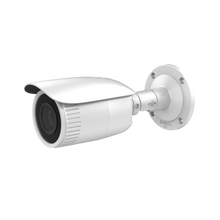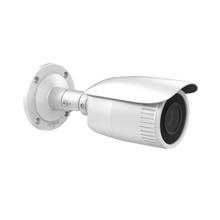
Camera poles & masts: see your property before burglars get close

If you're serious about securing your business premises, warehouse, or parking lot, good camera surveillance is essential. But cameras on facades or balconies alone are rarely enough—obstacles, angles, height differences, and lines of sight often play against you. This is where camera masts and pole systems come in: smart, flexible solutions for strategically placing your cameras, offering optimal visibility and reliable mounting.

Why use a mast or pole?
A camera pole or mast offers a number of clear advantages over mounting directly on walls:
-
Height & overview
By positioning the camera higher, obstacles (walls, trees, containers) are avoided. You have an unobstructed view of the terrain. This increases the detection range and reduces blind spots. -
Flexibility in placement
In situations where a suitable wall is not available (open terrain, parking lots, construction sites) you can place a mast in the ideal location. -
Deterrence & visibility
A mast with a camera makes a visual statement: "This area is being monitored." This can deter potential intruders. -
Mobility or adaptability
Mobile or telescopic masts allow for height or location adjustments to accommodate changing terrain or temporary projects. -
Assembly & maintenance access
Some mast types (tilting, telescopic) make maintenance easier — you don't have to climb to great heights.

What should you pay attention to when choosing a mast/pole?
When selecting a camera pole or mast you should pay attention to:
- Material & Construction : Aluminum, galvanized steel, truss structure — each has advantages and disadvantages (weight, strength, corrosion resistance).
- Stiffness & wind load : the mast must remain stable in the wind, no vibrations that cause the image to shake.
- Mounting foot & foundation : ground anchor, ballast foot or concrete foot — depending on location and soil.
- Height & Reach : How high is needed to have sufficient coverage?
- Cable entry : Internal passages for power and data cables, so everything is neatly protected.
- Maintenance options : tilting system, removable mast parts, telescopic operation.
- Weather and environmental conditions : salt, humidity, temperature variations — the mast must be robust.
Examples from the UMATECH range
Here are some masts/poles you have in your range and how you can use them:
| Product | Height / Type | Ideal application |
|---|---|---|
| UMA CP pole (4.5 m) universal camera pole kit | fixed pole kit | ideal for paved areas where a permanent post can be anchored |
| UMA ML55 aluminum truss mast (5.5 m) | truss/tilting mast | in places where maintenance and tilting is useful, such as construction sites or parking lots |
| UMA TT40 galvanized ballast mast (4 m) | ballast mast | suitable for temporary locations where no foundation can be made — mast is on ballast |
| UMA MT65 telescopic mast (6.5 m) | extendable mast | ideal when you need variable height — you extend when needed |
Usage scenarios:
- In an open storage yard, you can place an MT65 telescopic mast on a corner, with a PTZ camera on top that monitors entire sections of the plot.
- Around a construction site, you can use the ML55 truss mast — you can tilt the mast for maintenance, add extra cameras, or adjust cabling.
- For a temporary project or event, you can install a TT40 ballast mast without having to dig, using ballast concrete slabs or sandbags.
- For a standard terrain where permanent mounting is possible, the CP pole kit is ideal: a solid and elegant solution.
Tips for installation & use
- Check wind load in advance and make a calculation for your location (height + wind speed).
- Use vibration dampers or internal cable suspensions to reduce vibrations caused by wind or overvoltage in cables.
- Ensure that cables are routed inside the mast, preferably in a protected conduit, so that they are not exposed (safety, vandalism).
- Be careful when mounting heavier cameras (PTZs, heavy lenses) — the mast must have sufficient load-bearing capacity.
- Anchor ground anchors center-to-center at the correct distance (e.g. 1.5 × mast height) or use ballast of sufficient mass.
- Consider a tilt or slide-out system to allow maintenance at eye level instead of via ladders.
- Forgets not to lower the mast yourself during storms or maintenance, if this is mechanically possible.