Dome vs Turret vs Bullet Cameras – Which One Should You Choose?
In this guide, we explain the differences and in which situations each type of camera works best.

When securing a site, choosing the right type of camera is essential. Dome, turret and bullet cameras each have their own characteristics, advantages and ideal applications. The right choice prevents problems, extends the lifespan of the system and optimises image quality.
In this guide, we explain the differences and in which situations each type of camera works best.
Dome cameras
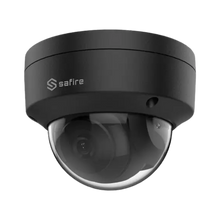
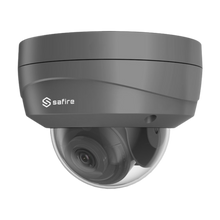
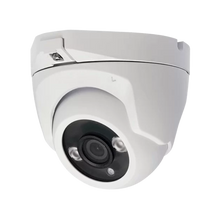
Dome cameras are recognisable by their half-sphere housing and are usually mounted on ceilings or walls. Thanks to their compact design, it's hard to see where they're pointing and hard to knock them out of alignment, which makes vandalism more difficult.
Features of dome cameras:
- Compact and discreet shape
- Often a vandal-proof housing
- Suitable for ceiling or wall mounting
- Available with varifocal lenses and IR illumination
Applications: Dome cameras are widely used in shops, offices and corridors, where a wide overview is needed and discreet surveillance matters.
Turret cameras
Turret cameras have a ball-shaped lens unit in a fixed housing and are also known as "eyeball" cameras. They are slightly easier to aim than dome cameras and are often less prone to reflections on glass.
Features of turret cameras:
- Flexible aiming
- Less affected by IR reflections
- Available with a rugged outdoor housing
- Compact design
Applications: Turret cameras are ideal for both indoor and outdoor use, for example at entrances, on terraces or in car parks. They combine flexible aiming with a relatively robust construction.
Bullet cameras
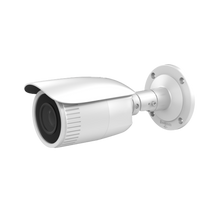
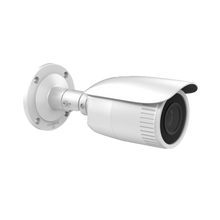
Bullet cameras have a cylindrical shape and a directional lens. They are clearly visible and often equipped with powerful IR illumination for night vision. Their shape makes them easy to aim at a specific area.
Features of bullet cameras:
- Cylindrical, conspicuous shape
- Easy to aim
- Often powerful night-time illumination
- Rugged housing suitable for outdoor use
Applications: Bullet cameras are suited to outdoor locations where visibility has a deterrent effect, such as car parks, access roads or warehouse areas.
Which camera type should you choose, and when?
The choice between dome, turret and bullet cameras depends on the location, visibility and security objective:
- Dome camera: discreet, suitable for indoor spaces, ceiling mounting, wide overview.
- Turret camera: flexible aiming, suitable for indoor and outdoor use, minimises IR reflections.
- Bullet camera: conspicuous, easy to aim, ideal for deterrence and outdoor use.
In many situations, a combination of cameras is the most effective approach. For example, dome cameras in the shop area, turret cameras at the entrances and bullet cameras for the car park.
Conclusion
Dome, turret and bullet cameras each have their own specific characteristics and ideal applications. Dome cameras are compact and discreet, turret cameras are flexible and robust, and bullet cameras are conspicuous and designed for targeted outdoor use. By choosing the right type for each location, you ensure optimal security and a reliable camera system.
UMATECH can advise you on the combination of cameras that best suits your situation, and takes care of installation and configuration for maximum control.