How to Connect a Simple Off-Grid Power System – Solar Panel, Battery, Charge Controller and Inverter
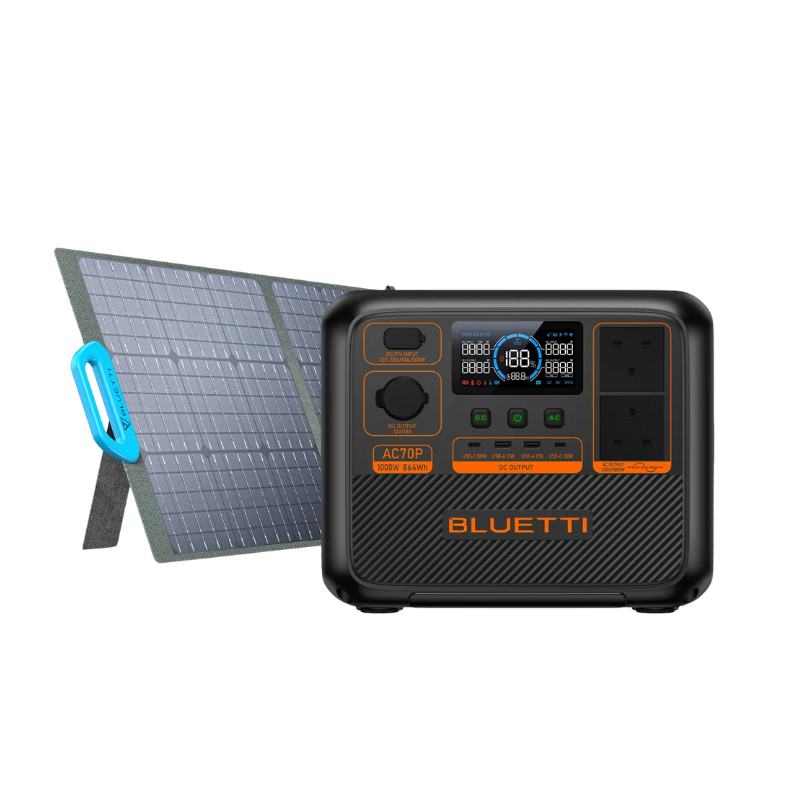
An off-grid power system is useful wherever there's no fixed connection to the electricity grid. Think of a campervan, garden shed, tiny house or any other location where you want to generate and store your own energy.
A simple off-grid system usually consists of four key components: a solar panel, a charge controller, a battery and an inverter. In this blog we explain what each component does and what to look out for when putting the system together.
What is an off-grid system?
An off-grid system works independently of the public electricity grid. Energy is generated by solar panels and then stored in a battery.
A complete system usually consists of:
- Solar panel: generates electricity from sunlight.
- Charge controller: regulates how the generated energy is fed to the battery.
- Battery: stores energy so you can use it later.
- Inverter: converts the battery's DC voltage into 230 V AC for compatible devices.
These components need to be properly matched in terms of voltage, power and capacity.
Choosing the right solar panel
Which solar panels you need depends mainly on how much energy you use each day and how much space is available.
For smaller applications a single panel may be enough, while larger systems may need several panels. Don't just look at the wattage, but also at the voltage and the specifications of the charge controller.
Many solar panels use MC4 connectors, so check in advance which connectors and cables go with the system you've chosen.
Browse the UMATECH solar panels to compare different power ratings and versions.
What does a charge controller do?
A charge controller sits between the solar panels and the battery. It manages the charging process and helps prevent the battery from being charged incorrectly.
Common types include PWM and MPPT charge controllers.
A PWM controller is usually simpler, while an MPPT controller can make more efficient use of the energy available from the solar panel. Which type is suitable depends on the solar panel, the battery and the rest of the system.
Always check the specifications and installation manual of the charge controller before connecting the system.
Choosing the right battery
The generated energy is stored in a battery. This means you can still use power when the solar panels are temporarily producing little or no energy.
Off-grid systems use various types of batteries. The capacity you need depends on your daily energy consumption and how long the system has to keep running without enough sunlight.
For example, a 60 W device used for 10 hours consumes 600 Wh per day. When choosing a battery, you also need to allow for efficiency losses and the characteristics of the battery type you choose.
So check carefully in advance how much energy the connected equipment actually uses.
When do you need an inverter?
A battery supplies DC voltage, while many everyday devices are designed for 230 V AC. That's what an inverter is for.
The inverter must be able to deliver enough power for the equipment you want to run. Don't just consider normal consumption, but also any peak loads when devices are switched on.
For sensitive electronics, a pure sine wave inverter is often used because it delivers a stable AC voltage.
Protection and cabling
Good cabling and protection are important in an off-grid system. Cables must be rated for the voltage and current used, and the system must be protected in line with the manufacturer's instructions.
Fuses and other protective devices safeguard components and cabling in the event of, for example, a short circuit or overload.
Because batteries can deliver high currents and an inverter can produce 230 V, the actual electrical connection must be carried out according to the manufacturer's manuals. If in doubt, have it done by a qualified installer.
Use a proper enclosure
Will the system be installed outdoors or in a plant room? Then it's important that the equipment is well protected against moisture, dirt and damage.
A suitable enclosure helps you mount components such as a charge controller, fuses and other parts in a neat, protected way.
Pay attention to the enclosure's protection rating and make sure components that generate heat get enough ventilation.
Common mistakes with off-grid systems
A common mistake is choosing components separately without checking whether they work together. The solar panel, charge controller, battery and inverter must be matched in terms of voltage and maximum power.
A battery that's too small can also cause problems if more energy is used each day than it can store.
So check in advance:
- how much energy you need each day;
- how much power the solar panels can deliver;
- which voltage the system uses;
- how much capacity the battery needs;
- how much power the inverter must be able to deliver.
Plan first, then install
A good off-grid system doesn't start with connecting cables, but with choosing components that work together.
First work out your expected power consumption, then choose suitable solar panels, a charge controller, battery and inverter.
If you'd rather not put all the components together yourself, take a look at our complete off-grid kits, in which the components are already matched to each other.
By looking carefully at capacity, voltage and power in advance, you avoid components that don't work well together later on and you build a more reliable off-grid energy system.
UMATECH – your partner in smart energy solutions.